You’ve spent real money on your first half-dozen Spanish colonial coins — maybe a raw cob escudo (a roughly struck, irregularly shaped gold coin minted in colonial-era South America, produced by cutting a chunk of metal and hammering it between dies), a couple of milled 8 escudos (the later, round, machine-struck coins with the portrait or shield design most people picture when they hear “Spanish gold”), and perhaps your first certified piece in a hard plastic holder called a slab — a tamper-evident case issued by a grading service like NGC or PCGS that locks the coin inside and labels its grade. Now the question that every collector hits around deal number five or six: where do these things actually live when they’re not in your hands? A shoebox is a joke, a fireproof safe is necessary but not sufficient, and the wrong album can chemically damage a coin worth more than a car payment. This article walks through every practical storage format — their tradeoffs, their costs, and the decision rules that tell you which one belongs in your setup at each price tier.
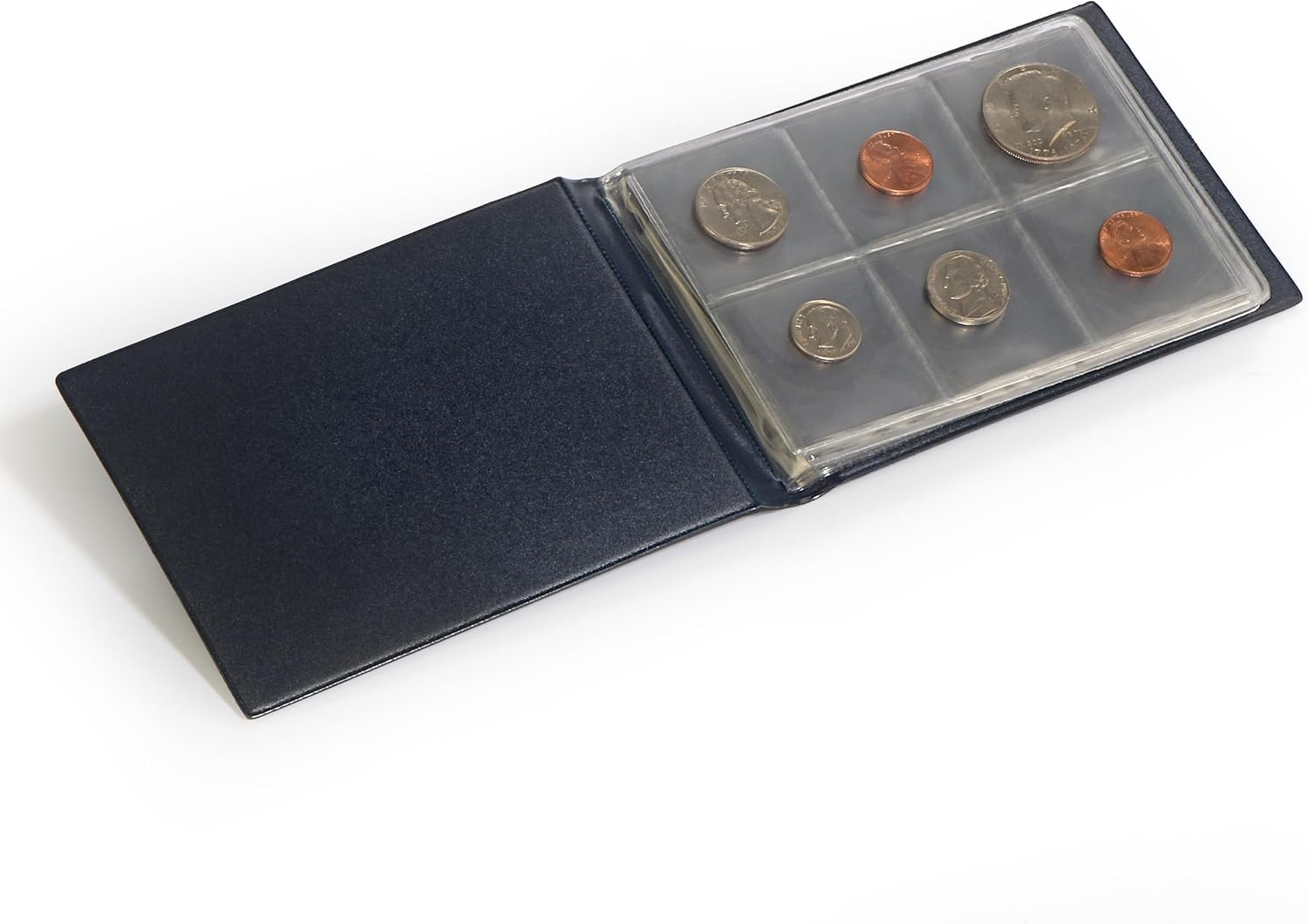
| EDITOR'S PICKCoin Collection Book Holder for… | Mid-tierFireproof Coin Collection Album… | Budget pick[LIGHTHOUSE - Pocket Album for C…](https://www.amazon.com/dp/B002W5ZGIC?tag=greenflower20-20) | |
|---|---|---|---|
| Capacity | 520 pockets | 300 pockets | 48 coins |
| Fireproof | ✓ | ✓ | — |
| Sleeves Included | 36 | 36 | — |
| Form Factor | Album + Case | Album + Case | Travel album |
| Price | $29.99 | $28.99 | $19.95 |
| See on Amazon → | See on Amazon → | See on Amazon → |
Why “Good Enough” Storage Is the Most Expensive Mistake You’ll Make
Here’s the trope that turns out to be completely true: storage damage is invisible until it isn’t. PVC (polyvinyl chloride), a plasticizer found in many cheap plastic flips and some older album pages, off-gasses a chemical that leaves a sticky green film on gold and silver surfaces. The American Numismatic Association’s “Coin Storage and Preservation” guide (available at money.org) calls PVC contamination one of the most common collector errors — and it’s almost entirely irreversible without professional conservation that costs more than the storage product ever did.
For Spanish colonial gold, the stakes are higher than for modern coins for two reasons. First, cobs are already surface-compromised by design — their irregular planchets (the metal blanks before striking) and rough surfaces create tiny pockets where contaminants pool. Second, if a coin’s surfaces degrade, it doesn’t just look worse; it can cost you an NGC or PCGS certification or drop a certified coin’s grade on reconsideration, which on a mid-tier piece worth $5,000–$15,000 can represent a $2,000–$4,000 loss. PCGS’s “Coin Care and Preservation” article makes this explicit: chemical contamination is a grade-limiting factor in re-submission reviews.
The math is blunt:
By the numbers
- A 100-count pack of archival-safe, PVC-free Mylar flips: ~$12–$18
- A 100-count pack of cheap PVC flips: ~$5–$8
- Cost of NGC conservation service for chemical damage: $30–$75 per coin minimum, outcome not guaranteed
- Grade-drop loss on a mid-tier 8 escudo (e.g., NGC AU-50 → EF-45): potentially $3,000–$8,000 in market value
Spend the $18. There is no decision to analyze here.
The Four Storage Formats and When Each Makes Sense
Think of your storage hierarchy as a series of nested containers, each one serving a different purpose. The format you choose at each level depends on three variables: the coin’s raw vs. certified status, its value tier, and how often you need to handle or show it.
Format 1: Archival Flips (Two-by-Twos)
A “flip” is a small folded plastic or Mylar envelope sized to hold a single coin. The name comes from the fact that you fold — or flip — one half over the other. The critical word is Mylar (or its generic equivalent, biaxially oriented polyethylene terephthalate, BOPET) — this is chemically inert and the industry baseline for safe single-coin storage, per NGC’s “Coin Storage FAQ.”
Best for: Raw cobs and circulated pieces in the $150–$1,500 range that you’re still evaluating, rotating for sale, or haven’t yet decided to certify. Also good as interim homes for coins in transit between dealer and your safe.
Tradeoffs: Flips are excellent for individual coins but poor for a browsable collection. You’ll end up with a stack of identical envelopes and no quick visual reference. They also don’t protect against humidity or physical shock — they’re chemical barriers, not structural ones.
Collector practice note: Coin World’s “Housing Your Collection” feature notes that experienced collectors often write attribution details in pencil on the cardboard portion of a two-by-two cardboard flip (a flip with a cardboard frame around the Mylar window), keeping provenance notes physically attached to the coin. For Spanish colonials where mint mark and assayer identification are value-driving details, this is genuinely useful practice — a Lima LM/assayer M cob and a Potosí P/assayer Q cob can look nearly identical to a casual eye, and misattribution costs money.
Format 2: Coin Pages in a Binder
Coin pages are sheets of archival plastic pockets — typically 9–20 pockets per page — that slide into a standard three-ring binder. This is where most intermediate collectors build their first “working cabinet,” the browsable reference collection you can flip through, show a fellow collector, or take to a club meeting.
Best for: A collection of 20–150 raw or loosely held coins where visual access and side-by-side comparison matter. The ability to lay out a sequence — say, all your cob 8 escudos by date range, or your milled coins by mint — makes attribution work dramatically easier.
The critical specification: Pages must be made of Mylar, polypropylene, or polyethylene — never PVC. Numismatic News’s “Protecting Your Coins from Environmental Damage” article identifies vinyl (PVC) coin pages, still sold at many big-box retailers, as a persistent source of collector losses. Check the product specification before buying. If it says “vinyl” without specifying PVC-free, assume it contains PVC.
Tradeoffs: Binder pages work poorly for slabs. The standard NGC/PCGS slab is too thick for most coin page pockets — you’ll end up with a binder that buckles and coins that fall out. For certified pieces, see Format 3. Binder pages also offer zero humidity protection; if your storage environment gets above 65% relative humidity seasonally, you need a desiccant pack in the binder or a better outer container.
Practical size note: Standard 2x2 pockets fit most cobs and smaller milled coins. For large-format 8 escudo cobs — which can run 35–38mm across their longest dimension, and irregular ones wider — you may need the “large coin” or “half-dollar” sized pockets, or even custom pages. Always measure your largest coin before ordering a hundred pages you can’t use.
Format 3: Slab Boxes and Certified-Coin Trays
Once you have five or more certified coins, the binder system breaks down. Slabs need a different infrastructure. The two practical formats are foam-lined slab boxes (rigid cardboard or plastic boxes with die-cut foam inserts that hold slabs upright) and slab trays (flat stackable trays with individual slab-sized recesses, similar to what dealers use at shows).
Best for: Any certified piece — NGC, PCGS, ANACS, or other recognized service. Slabs are already chemically and physically protected; the box’s job is organization, physical protection against falls, and fire-safe storage.
The tradeoff that matters: Slab boxes are excellent for storage density and protection but poor for browsing. Trays are excellent for display and comparison — at the level where you’re building a cabinet of 15–30 certified colonial milled pieces, a tray system lets you see the entire collection at once — but they’re bulkier and more expensive. The collectors who have thought most carefully about this problem, as documented in dealer practice notes at firms like Sedwick Coins and in Heritage Auctions’ consignor preparation guidance, tend to use boxes for long-term storage and trays for active review or presentation.
A note on custom inserts: For high-value pieces ($20,000+), several numismatic suppliers offer custom foam-lined cases sized to individual slabs. This is overkill for a mid-tier collection but worth knowing about as your certified holdings grow — a $45,000 NGC MS-62 Lima 8 escudo deserves a presentation case, not a generic slab box.
Format 4: Archival Albums (Coin Albums with Acetate Slides)
The classic “coin album” — a hardbound book with individual plastic slides you push coins into — is what many collectors picture when they imagine a “collection.” Brands like Dansco and Whitman have sold this format for decades. The slides hold coins display-face-out so you see both obverse and reverse simultaneously.
For Spanish colonials, use with significant caution. The standard coin album was designed for round, consistently sized coins — Morgan dollars, Lincoln cents, that sort of thing. Cobs are neither round nor consistent. A cob escudo that’s 30mm at its widest point and 22mm at its narrowest will not seat cleanly in a fixed-diameter hole. Forcing it risks edge damage. Even milled 8 escudos vary slightly in diameter across mints and dates in ways that can make a snug fit into a rigid hole genuinely risky.
Where albums do work: For your milled colonial pieces — particularly the later 18th-century “bust” coinage (the series bearing the king’s portrait, struck from roughly 1732 onward) — where diameter consistency is better, an album can work well and provides excellent display. PCGS’s “Coin Care and Preservation” guidance recommends confirming that any album’s plastic components are PVC-free before use; many older Dansco albums used materials that have since been reformulated.
The honest bottom line on albums: For a collector whose holdings are 50/50 cobs and milled pieces, a binder with archival pages handles both; a traditional album handles only half your collection and creates real damage risk for the other half.
Decision Rules: If X, Then Y
Here’s the synthesis that saves you from buying the wrong format twice:
If your collection is under 30 coins, mostly raw cobs: Archival Mylar two-by-twos in a binder with large-pocket polypropylene pages. Budget $30–$50 total. Add a silica gel desiccant pack.
If you’re building a browsable working cabinet of 30–100 mixed raw and circulated pieces: Polypropylene binder pages in a quality three-ring binder, supplemented by two-by-twos for anything awaiting certification decisions. Total infrastructure cost: $50–$100.
If you have 5+ certified slabs and are buying in the $1,000–$15,000 range regularly: Invest in a foam-lined slab box for storage and a slab tray for active review. Keep the binder pages for your raw holdings. Budget $40–$80 for the slab infrastructure.
If any single coin in your collection exceeds $20,000: That piece needs its own presentation case, a separate inventory record with photos, and storage in a professional-grade safe with humidity control — the album and binder question becomes secondary to environmental control and insurance documentation, which deserves its own article.
The underlying principle is simple: match the format to the coin’s physical reality (cob vs. milled, raw vs. slabbed), match the protection level to the coin’s value, and never compromise on the PVC question regardless of tier. The storage format is the cheapest decision you’ll make in this hobby — spend a little more than you think you need to, get it right once, and spend the rest of your budget on coins.