You have a Heritage Auctions preview in three days. Tucked in your desk drawer is an NGC-certified 8 escudos — that is, an eight-unit gold coin minted in colonial Spanish America, roughly the size of a poker chip but worth considerably more — and a small group of raw cob pieces you want a specialist to look at in person. A “cob,” for readers who are newer to this corner of numismatics, is a roughly shaped, hand-struck coin produced by cutting a chunk from a gold or silver bar and hammering it between dies. They look almost accidental, but the right one in the right grade can fetch tens of thousands of dollars. The question you are actually losing sleep over is not the valuation — it is the seventeen steps between your desk and the auction floor. What do you put the coins in? How do you carry them through a hotel lobby? What happens if the airline loses your bag? This article walks through every layer of that problem, names the tradeoffs honestly, and gives you a clear decision rule for each spending tier.
The Threat Model: What Actually Goes Wrong in Transit
Before buying a single piece of foam, it helps to understand the four real failure modes collectors face:
Physical shock and abrasion. A certified coin lives inside a hard plastic “slab” — the tamper-evident holder issued by grading services like NGC or PCGS — which offers meaningful protection against casual contact. An uncertified raw cob has no such armor. Even sliding across a car seat can add hairlines (microscopic scratches) that drop a grade and, on a $5,000 coin, drop the price by $1,500 or more.
Moisture and chemical exposure. PVC (polyvinyl chloride) plasticizer, found in many cheap coin flips and some older binders, off-gasses onto gold surfaces and creates a green or oily film. Per PCGS’s “Coin Storage and Care” article, even brief contact with a PVC-containing holder can begin surface degradation. Gold is less reactive than silver, but impurities in cob-era alloys make some colonial pieces more sensitive than modern bullion.
Loss or theft. A show floor is a professional environment, but it is also a crowd. A dealer’s table is not a vault. Sedwick Coins’ collector notes consistently remind consignors to maintain custody of high-value pieces during any in-person showing rather than leaving them unattended.
Insurance gap. Most homeowners’ or renters’ policies cap scheduled personal-property coverage at $1,000–$2,500 per item in transit, and many exclude “in transit” entirely unless a rider is purchased. The American Numismatic Association’s collector insurance resource page outlines ANA-endorsed policies (through companies like Hugh Wood Inc.) that cover transit, show floors, and temporary storage — something worth reviewing before you leave the house, not after you arrive at the hotel.
Containers: Matching the Vessel to the Coin
This is the decision most collectors underthink. Here is a practical framework by coin type:
Slabbed Coins (NGC / PCGS Certified)
The slab itself does real work — it immobilizes the coin, protects surfaces from direct contact, and carries tamper evidence. Your job is to protect the slab from cracking and from the embarrassment of walking into a Heritage preview with a chipped holder.
Single-slab pouches or felt sleeves. Inexpensive, lightweight, and effective for coins in the $1,000–$10,000 range going to a one-day show. Collectors report that a padded neoprene pouch for slabs keeps corners intact through normal bag jostling. Our editorial pick for everyday carry in this category is a purpose-built slab pouch from a numismatic supplier — look for ones with a foam or felt interior and a secure zipper, sized specifically for standard NGC/PCGS slabs.
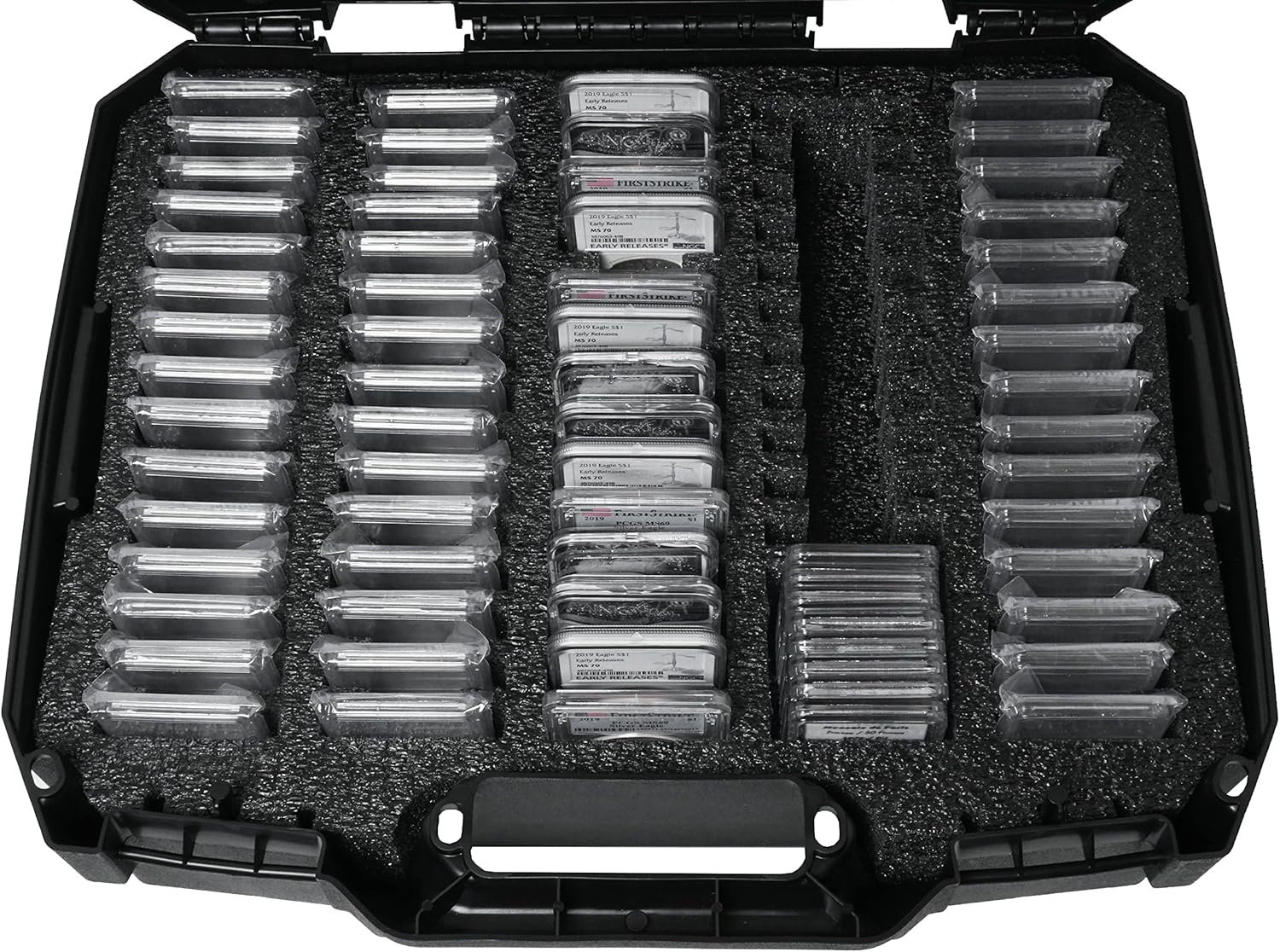
Multi-slab hard cases. For five or more certified pieces, or for anything above $15,000 per coin, a rigid case with individual slab slots is a meaningful upgrade. These are typically injection-molded polypropylene or ABS with foam inserts cut to slab dimensions. Coin World’s 2024 transit feature notes that hard-shell cases dramatically reduce the risk of corner chipping during air travel. If you are flying to a Stack’s Bowers or Heritage auction with a group of presentation coins, this is non-negotiable.
Raw Cobs and Unslabbed Colonial Pieces
This is where the discipline matters most, because the coin has no protective shell of its own. The standard collector recommendation, consistently echoed in NGC’s handling guide and among specialist dealers like Sedwick Coins, is a two-layer approach:
- Individual inert coin flip — Mylar or polyethylene, never PVC. The flip holds the coin without metal-on-metal contact.
- Hard outer container — a rigid coin tube, a foam-lined box, or a purpose-built travel case.
For a small group of raw cobs (say, three to eight pieces), a foam-lined aluminum or polycarbonate case with individual coin wells is the practical choice. These are available from numismatic supply companies and general travel-case retailers. Collectors who bring raw material to shows consistently report that rigid foam-fitted cases prevent the lateral movement that causes edge dings during car or flight travel.
For a single high-value raw cob — anything you are considering sending to NGC or PCGS for certification — a padded rigid single-coin box or a dedicated capsule is appropriate. Coin capsules (clear acrylic or polystyrene discs that snap together around the coin) come in sized variants; for irregular cobs, measure the largest dimension and go one size up to avoid pressure on the coin’s high points.
By the Numbers
| Coin tier | Holder type | Recommended container | Estimated container cost |
|---|---|---|---|
| Raw cob, $150–$500 | Inert flip | Foam-lined rigid box or tube | $8–$25 |
| Raw cob or mid-grade, $500–$5,000 | Inert flip + capsule | Foam-insert aluminum case | $25–$60 |
| Certified slab, $1,000–$15,000 | NGC/PCGS slab | Padded slab pouch or hard slab case | $15–$80 |
| Certified slab, $15,000–$100,000+ | NGC/PCGS slab | Hard multi-slab case + transit insurance | $60–$150 + policy cost |
Logistics: How You Actually Carry the Thing
Carry-On Only — No Exceptions Above $1,000
This is not a preference; it is a decision rule. Checked baggage is handled by conveyor systems, tossed into cargo holds, and occasionally lost. The TSA does not have special protocols for numismatic items. The moment a coin leaves your physical custody in an airport, your insurance carrier’s “in transit” coverage terms become the relevant document — and many policies have sub-limits or exclusions for checked luggage. Per the American Numismatic Association’s collector insurance guidance, verified custody (meaning the item stays with you) is the cleanest claim position.
When going through security, declare high-value items proactively if you are uncertain. In practice, coins in hard cases rarely trigger additional screening, but being prepared to explain what you are carrying is faster than being pulled aside.
The Body-Carry vs. Bag-Carry Question
For a single high-value certified piece — a royal presentation 8 escudos, a certified shipwreck survivor — many experienced collectors carry the coin on their person in an interior jacket pocket or a discreet travel pouch worn under clothing, not in a bag that can be set down or grabbed. This sounds paranoid until the first time you set a bag on a dealer’s table and walk two steps away to look at something. Stack’s Bowers’ consignment documentation explicitly notes that provenance and custody continuity matter at auction; that mindset translates cleanly to transit habits.
For a larger group of pieces (multiple slabs, a mix of raw and certified), a dedicated hard-shell carry-on or a quality daypack with a locking zipper is the practical answer. Some collectors use TSA-approved cable locks on zipper pulls as a visible deterrent, even inside a hotel room.
At the Show or Preview
Auction houses running major previews — Heritage, Stack’s Bowers, Sedwick Coins at major shows — have secure viewing areas and staff on the floor. But the walk to and from the venue, the lunch break, the parking garage, are your responsibility. Numismatic News has covered show-floor theft incidents consistently enough that the advice is now standard: do not show your best piece to a stranger who approaches you in a hallway. Bring coins out of the case in the viewing room, not in a corridor.
Insurance: The Layer Everyone Skips Until They Need It
Container choice is the physical layer. Insurance is the financial layer. They are not interchangeable.
A homeowners’ policy rider for scheduled jewelry or collectibles typically runs 1–2% of appraised value annually and covers transit, but read the language on “in transit” definitions carefully — some policies require a professional carrier or armored transport above a certain value threshold. For a $30,000 NGC-graded colonial piece going to a show in your carry-on bag, that threshold matters.
The ANA-endorsed collectibles insurance programs (the ANA’s money.org resource page lists current partners) are purpose-built for this use case. Numismatic News has reported on claims resolutions under these programs; the key differentiator is that they cover coins at shows and in transit without requiring the collector to prove professional handling.
Decision rule: If the total value of coins you are transporting exceeds your homeowners’ policy’s scheduled-property limit, get a standalone collectibles rider or a show-trip-specific policy before you leave. If you do not know your current limit, call your agent this week — not the day before the show.
The Decision Framework
Here is how to make the call quickly when you have a trip coming up:
- Under $500 total value being transported: An inert coin flip inside a rigid tube or small foam-padded box is adequate. Skip the specialized case.
- $500–$5,000 total value, mix of raw and certified: Inert flips for raw pieces, slab pouch for certified, rigid carry case for everything. Verify your homeowners’ rider covers this amount in transit.
- $5,000–$20,000 in a single piece or combined: Hard multi-slab or foam-insert aluminum case, carry-on only, body-carry or secured bag at all times. Confirm insurance covers “in transit to and at numismatic events.”
- Above $20,000 — especially a certified shipwreck survivor or royal 8 escudos: All of the above, plus a standalone collectibles policy with explicit show-floor and transit language, and a written inventory with photos before you leave the house. Some collectors at this tier use a professional coin transport service or ship via registered, insured mail to the auction house directly — the Stack’s Bowers and Heritage consignment teams can advise on their preferred submission logistics.
The containers and pouches described here are not expensive relative to what you are protecting. A $40 hard slab case is not a meaningful cost against a $15,000 coin. The real cost of skipping it is not the $40 — it is the corner chip that knocks an NGC MS-62 to a damaged or net-graded coin and costs you $6,000 in resale value. That is the math worth keeping in mind every time you reach for a zip-lock bag instead.