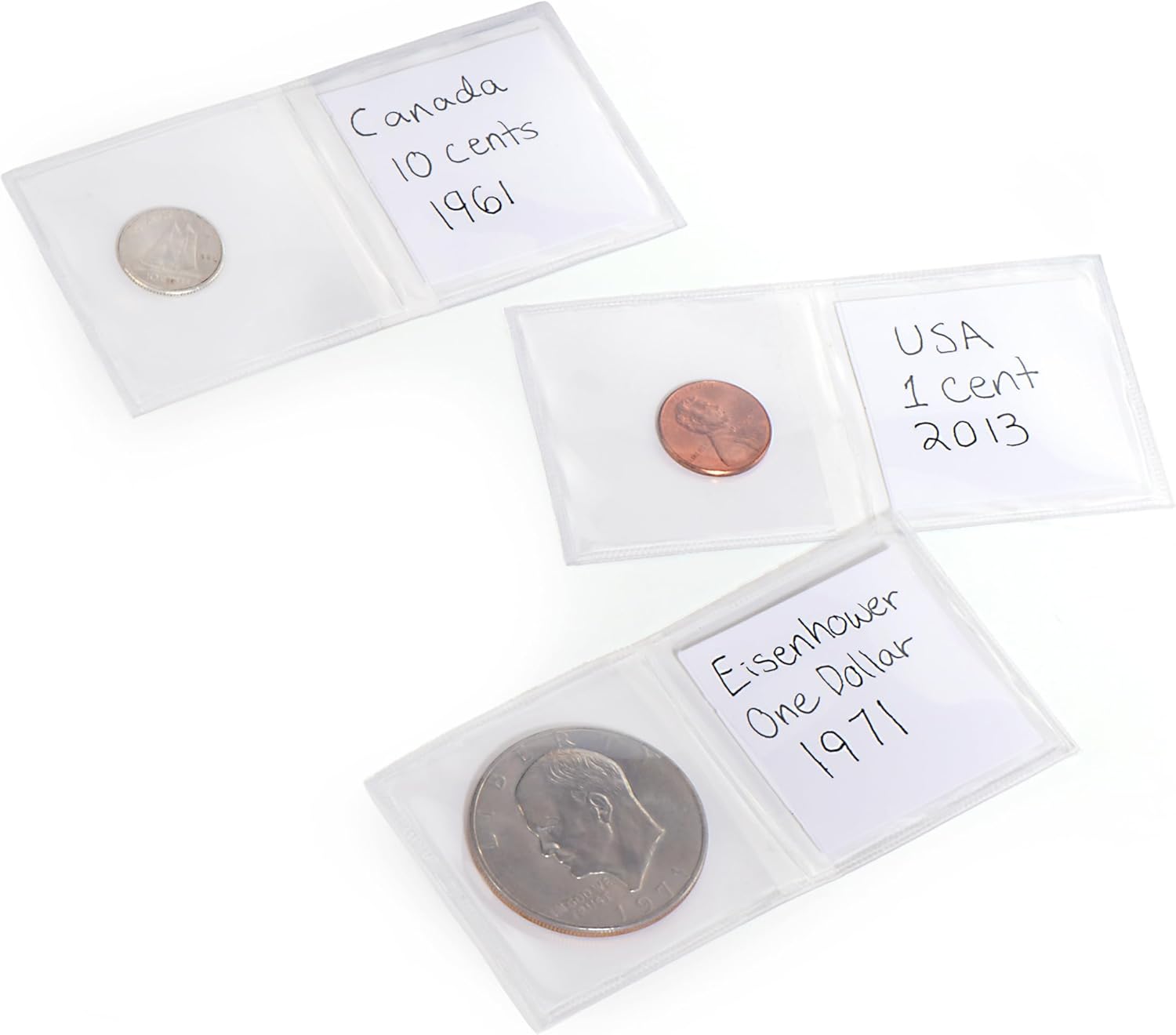
If you’ve ever bought a raw Spanish cob — a hand-struck gold or silver coin made in the colonial mints of the Americas, roughly from the 1500s through the early 1700s — you already know it doesn’t look like a quarter. It’s irregular, lumpy, and often thicker on one side than the other. The term “raw” just means the coin hasn’t been submitted to a professional grading service like PCGS or NGC and sealed inside a hard plastic slab. Instead, it’s loose, unprotected, and entirely your responsibility. The most common first storage solution collectors reach for is a coin flip — a small, folded holder, usually made of cardboard with a clear window, or made entirely of soft plastic. They cost pennies each. The problem is that the wrong flip can chemically attack a coin over months or years, leaving green slime on silver or haze on gold. This article shows you how to choose the right flip for raw cobs, size them correctly for irregular shapes, and sidestep the single most expensive mistake beginners make in coin storage.
The PVC Trap: Why the Wrong Plastic Is a Silent Killer
Let’s start with the mistake that generates the most distress emails in collector forums: PVC damage.
PVC stands for polyvinyl chloride, the flexible plastic used in soft, squishy coin flips — the kind that feels almost rubbery between your fingers. Manufacturers add chemical plasticizers to PVC to keep it pliable. Over time, especially in warm or humid conditions, those plasticizers off-gas and deposit a greenish, oily residue directly onto a coin’s surface. On silver, this shows up as a sticky green film. On gold, it can appear as a dull haze or faint green tinting in the recesses of the design.
Here’s the brutal part: by the time you see PVC residue, chemical interaction has already been happening for months. Coin World’s feature on PVC damage and prevention notes that early-stage contamination is often invisible to the naked eye under normal lighting, and that reversing the damage — while sometimes possible with acetone conservation — is never guaranteed and always risky on a coin you haven’t yet had professionally assessed.
For a raw cob worth $300–$500, mild PVC haze might reduce its grade at PCGS or NGC by a full point or more, which at that price tier can mean the difference between a coin that slabs cleanly and one that comes back with an “environmental damage” notation that follows it forever on the population report. For a cob in the $2,000–$5,000 range, the same notation is a provenance anchor you do not want.
The fix is simple and cheap: only use flips labeled “archival safe,” “PVC-free,” or “Mylar” (a brand name for biaxially oriented polyester film). These are stiff, crinkle when you bend them, and don’t feel rubbery. They cost marginally more per unit than PVC flips but are available in bulk from major numismatic suppliers. The American Numismatic Association’s coin storage guidance specifically recommends inert, polyester-based holders for long-term coin storage, and PCGS’s collector resource echoes the recommendation against any plasticized PVC contact for coins awaiting grading submission.
By the numbers
- PVC flip (soft, rubbery): ~$0.03–$0.06 per unit — avoid entirely
- Mylar/polyester archival flip: ~$0.08–$0.15 per unit — use exclusively
- 2×2 cardboard flip with Mylar window: ~$0.10–$0.20 per unit — best all-around for cobs
- Estimated grade penalty from moderate PVC haze at NGC/PCGS submission: 1–2 points, per NGC’s coin care documentation
Sizing Cobs: Why Standard Coin Sizes Don’t Apply
A standard U.S. quarter is 24.3 mm in diameter — perfectly round, perfectly consistent. Coin flip manufacturers build their size categories around that kind of uniformity: 18mm, 22mm, 26mm, 30mm, and so on.
Cobs don’t care about any of that.
A cob (from the Spanish cabo de barra, meaning “end of the bar”) was made by cutting a chunk of metal from a cast bar, roughly weighing it to the correct denomination, and striking it between dies. The result is a coin that might measure 23mm on one axis and 31mm on the other, or that has a thick flange of metal jutting off one edge. An 8 escudo gold cob — the largest denomination, roughly the size of your thumb — might span anywhere from 28mm to 40mm depending on how the planchet broke.
Numismatic News’s guide to holders for oddly shaped coins recommends a counterintuitive approach for cobs: size up one full tier from the coin’s widest measurement, then center the coin in the flip’s window using the cardboard fold as a cradle, not a tight fit. A cob that measures 32mm at its widest should go into a 38mm or 40mm flip, not a 32mm flip that grips it edge-to-edge. Why? Two reasons:
-
Edge pressure causes micro-abrasions. If the flip window is sized to hug the coin’s widest point, any slight shift during handling rubs the edge metal. On gold, where surfaces are soft, repeated handling in a too-tight flip leaves hairline marks that a grader will notice.
-
Irregular cobs don’t lie flat. A coin that’s thick on one side will tilt inside a tight holder, stress-creasing the Mylar window and potentially pressing one face of the coin against the plastic at an angle. A larger flip lets the coin settle naturally.
For the cardboard-windowed 2×2 flip format — the most common type among intermediate collectors — the workflow that experienced dealers describe is to fold the cardboard, drop the cob into the larger side, position it in the window, and then fold closed without stapling too close to the coin’s edge. Staples placed directly adjacent to the coin can scratch during opening. Place staples at the outer edge of the cardboard.
Cardboard vs. Pure Plastic Flips: The Tradeoff Matrix
Once you’ve committed to PVC-free materials, the next decision is format: 2×2 cardboard flips with a Mylar window versus full Mylar or polyester pocket flips (sometimes called “poly flips” or “currency-style” sleeves).
Here’s the honest comparison, based on published collector guidance and the consistent pattern across dealer usage reports:
2×2 Cardboard Flips (Mylar window)
- Best for: labeling. The cardboard panel takes pencil or ink notation — denomination, mint mark, assayer, purchase price, lot number. For a building collection where provenance tracking matters, the ability to write directly on the holder is significant.
- Risk: cardboard itself can be acidic if it isn’t acid-free stock. Look for flips explicitly labeled “acid-free cardboard.” Non-acid-free cardboard off-gasses sulfur compounds over years, which tones silver and can spot gold.
- Durability: moderate. The cardboard warps slightly in high humidity.
- Best source: major numismatic suppliers in bulk packs of 100+; NGC’s coin care page references this format as appropriate for short-to-medium-term storage of unslabbed coins awaiting submission.
Full Mylar/Polyester Pocket Flips
- Best for: coins you’re moving frequently — show inventory, coins going out for photography, anything handled regularly. The clear-on-both-sides format lets you view both faces without removing the coin.
- Risk: no labeling surface, so tracking requires a separate system (a folded paper insert works, but adds one more piece that can shift and abrade).
- Durability: higher than cardboard in humid conditions.
The decision rule: If the cob is going into a box and staying there for six months or more — especially if you’re building toward a PCGS or NGC submission — use acid-free 2×2 cardboard with a Mylar window, sized up one tier. If the cob is in active rotation for shows, consignment review, or photography, full Mylar pocket flips reduce handling friction.
Building a Storage System That Scales
One flip is a storage solution. Thirty flips in a shoebox is a problem waiting to happen. Intermediate collectors building a working inventory of raw cobs should think one level up from the flip itself.
Coin storage boxes designed for 2×2 holders (typically holding 100 flips per box, available in cardboard or plastic construction) keep flips upright, labeled face-forward, and organized by denomination or mint. The consistent recommendation across ANA storage guidance and dealer best-practice documentation is to store boxes in a cool, dry, stable environment — baseboard heaters and exterior walls that cycle between warm and cold create the humidity fluctuation that accelerates both PVC off-gassing (if any contaminated flips sneak in) and cardboard acid migration.
For gold cobs specifically: gold is chemically inert and doesn’t tone from sulfur the way silver does, but it does pick up contact marks easily. Even inside a properly sized Mylar flip, a gold cob that rattles around during shipping can develop hairlines. Interleave a small square of acid-free tissue between the cob and the flip window for any piece you’re shipping — this is standard practice among dealers consigning to Heritage Auctions and Stack’s Bowers, based on their published submission guidelines.
The If-Then Decision Frame
You’re looking at a raw cob you just purchased or are about to purchase. Here’s how to run the storage decision quickly:
- If the coin is silver and you’re holding it more than 90 days → acid-free 2×2 cardboard + Mylar window, sized up one tier, stored in a low-humidity environment. Sulfur toning on silver is slow but cumulative.
- If the coin is gold and valued above $1,000 → full Mylar pocket flip plus acid-free tissue insert, then into a rigid box. Gold’s softness means abrasion is the enemy, not chemistry.
- If you inherited or purchased a lot of flips and aren’t sure whether they’re PVC → bend one between your fingers. If it’s soft and rubbery, it’s PVC. Remove your coins immediately and transfer to verified archival flips. Do not store them “temporarily” in the PVC flip while you order replacements — that’s how “temporary” becomes “six months.”
- If the cob is pre-submission and you’re building toward NGC or PCGS → label your 2×2 flip with assayer, mint, date range, and your purchase price in pencil. This information survives the submission process in your own records even after the coin comes back in a slab. Treat the flip as a data document, not just a wrapper.
- If you’re actively showing cobs at a show or to a dealer for consignment assessment → full Mylar pockets, handled from the edges only, with a clean soft pad underneath. The flip is protection in transit; the pad is protection during review.
The supply cost difference between doing this right and doing it wrong is genuinely trivial — a few dollars per hundred flips. The cost of getting it wrong on a $3,000 cob that comes back from the grader with an environmental damage notation is not trivial at all. Build the habit once, early, and it scales across every tier of your collection.