You bought your first piece in a hurry — a raw (meaning ungraded, straight from a dealer’s stock) 2-escudo cob (a roughly struck colonial Spanish gold coin, hand-hammered on a cut blank rather than machine-minted) at a coin show, paid cash, tucked it in a flip, and got on with your day. A year later you’re looking at it in a tray with four other cobs and you cannot remember whether you paid $340 or $490, whether the dealer was in Florida or at a Long Beach show, or whether the ink smudge on the 2x2 cardboard holder is a note you wrote or something that came with it. That coin is now harder to insure, harder to sell, and harder to value at estate time than it should be.
This article is about building the habit before that problem multiplies. If you have six to thirty coins in active rotation — buying, considering selling, watching the market — a documented inventory is the single highest-leverage thing you can do for your collection this month. It takes about twenty minutes per coin to set up and almost nothing to maintain. What follows is a field-tested framework built around the specific data points that matter for Spanish gold: mint mark, assayer, denomination, and provenance chain.
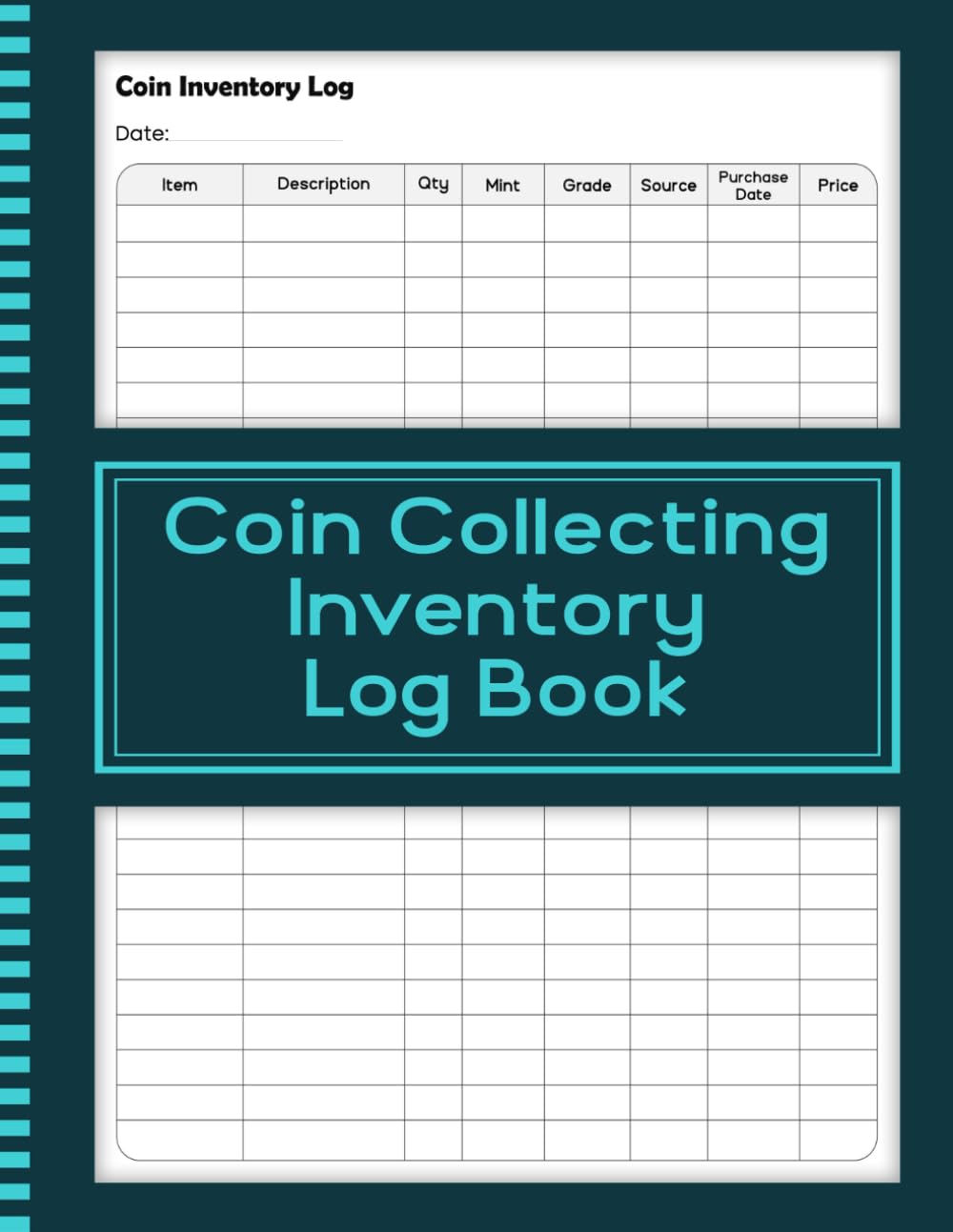
| EDITOR'S PICK[The Coin Collecting Bible: [5 i…](https://www.amazon.com/dp/1801717907?tag=greenflower20-20) | Mid-tier[The Complete Coin Collecting Bi…](https://www.amazon.com/dp/B0GQXD1J7Y?tag=greenflower20-20) | Budget pick[Coin Collecting Inventory Log B…](https://www.amazon.com/dp/B0D1MRB5GL?tag=greenflower20-20) | |
|---|---|---|---|
| Inventory pages | — | — | ✓ |
| For beginners | ✓ | ✓ | — |
| For advanced | ✓ | ✓ | — |
| Price | $27.97 | $24.95 | $6.99 |
| See on Amazon → | See on Amazon → | See on Amazon → |
Why Spanish Gold Specifically Rewards Obsessive Documentation
Most coin categories reward documentation. Spanish colonial gold punishes the absence of it at a rate that surprises collectors who migrate from other areas of numismatics.
Here’s why the stakes are higher:
Provenance multiplies value directly. A certified NGC-graded 8-escudo cob from the 1715 Fleet shipwreck — meaning it was recovered from an identifiable Spanish treasure fleet lost off Florida’s coast — can trade for two to three times the value of an equally graded coin with no shipwreck attribution, according to realized-price data tracked across Heritage Auctions sale archives. That provenance lives in paperwork: original auction receipts, dealer invoices, NGC holder serial numbers tied to shipwreck certification. Lose the paper, lose the premium.
Attribution questions are real money questions. A Lima mint (Peru) 8 escudos and a Mexico City mint 8 escudos of the same date and grade can carry meaningfully different prices based on collector demand for each series. The mint mark — a small letter stamped into the coin’s surface — and the assayer initial (the colonial-era official who certified the gold’s purity, identified by a letter) together determine which coin you actually own. If you bought on a dealer’s verbal attribution and never wrote it down, you own an undocumented opinion, not a documented coin.
The counterfeit problem is active. This site tracks new fake cob series appearing in the secondary market on a monthly basis. When a coin surfaces in an estate or resale situation, the first question a buyer’s expert asks is: where did this come from, and when was it last in the hands of someone reputable? A documented chain — dealer invoice, auction lot number, NGC/PCGS certification — answers that question before it becomes a problem.
The Eight Fields Every Cob Entry Needs
Whether you use a spreadsheet, a dedicated numismatic database app, or a physical ledger, every entry in your Spanish gold inventory should capture these eight data points. Think of them as the coin’s ID card.
1. Coin ID number. Assign your own sequential number (SGC-001, SGC-002, and so on). This is your internal reference — it goes on the storage holder, in your photos, and in your insurance rider.
2. Denomination and type. 8 escudos cob, 2 escudos milled, 1 escudo cob — be specific. “Milled” means machine-struck (post-1732 Potosí “columnario” style, for example), which is a different market than hand-hammered cobs.
3. Mint mark and assayer. Lima (L or LIMA), Mexico City (Mo or M), Potosí (P or PTS), Cartagena (NR), Santa Fe de Bogotá (NR with different assayer letters), Cuzco (C). Assayer initials follow: for Lima, common assayers on 18th-century pieces include R, N, and J. Write both, because they appear together on the coin and are inseparable for valuation purposes.
4. Date. Many cobs are partially dated or undated — record what is visible. “1715 (partial, last two digits clear)” is a legitimate entry. “Undated” is also legitimate. Never guess and record the guess as fact.
5. Grade and certification status. Raw (ungraded), NGC-slabbed (encapsulated and graded by Numismatic Guaranty Company), or PCGS-slabbed (Professional Coin Grading Service). If slabbed, record the certification number printed on the holder — this ties your coin to the population report database, where PCGS and NGC track how many examples of each type they’ve graded at each grade level.
6. Purchase price and date. What you paid, in full, including buyer’s premium if purchased at auction. Heritage Auctions and Stack’s Bowers charge buyer’s premiums (typically 20–25% on top of the hammer price as of mid-2026); your true cost basis is hammer plus premium, not hammer alone.
7. Source. Dealer name, auction house, lot number if applicable. “Sedwick Coins, Auction 34, Lot 412” is a complete source entry. “Coin show, Florida, guy with a red beard” is not.
8. Notes / condition observations. Strike quality (how sharp the design impression is — think of it like the sharpness of a photograph, clearer is more valuable), luster, any edge nicks, cleaning evidence, or anything a future appraiser would want to know. This is also where you note any verbal attribution the dealer made that isn’t captured in a written invoice.
By the numbers: what documentation does to resale outcomes
| Documentation level | Typical buyer response at resale |
|---|---|
| Invoice + auction lot + NGC slab serial | Full market bid; shipwreck premium fully transferable |
| Invoice only (no slab) | Buyer may request re-grading; discount risk of 10–20% |
| No documentation, raw coin | Expert attribution required; buyer absorbs uncertainty risk in offer |
| No documentation, suspicious surfaces | Many serious dealers will pass entirely |
Building the System: Spreadsheet vs. Dedicated Software
The right tool is the one you will actually update within 48 hours of a purchase. Complexity is the enemy of consistency.
The case for a spreadsheet (Google Sheets or Excel): It’s free, syncs across devices, and the eight-field structure above maps directly to eight columns. Collectors who maintain their own records and compare notes on valuation — a common pattern among intermediate buyers sourcing from dealers like Sedwick Coins, APMEX, or Stack’s Bowers — consistently report that a simple spreadsheet they actually maintain beats sophisticated software they abandon after two weeks. The American Numismatic Association’s member guidance on collection organization, available through Money.org, reaches the same conclusion: consistency of entry matters more than feature richness.
The case for dedicated numismatic software: Programs designed specifically for coin cataloging let you attach photos directly to records, link to PCGS CoinFacts population data, and generate insurance-ready reports in a single export. NGC’s collector resources section documents how certification numbers in their database can be linked to collector tracking tools, which is useful if your collection is primarily slabbed. The tradeoff is setup time and a learning curve that often delays first entries.
The hybrid that works best at the 10–30 coin level: Use a spreadsheet as your master record for all eight fields, and maintain a separate folder (Google Drive, Dropbox, or a local folder backed up offsite) of scans and photos. Name every photo file with your internal coin ID number (SGC-001-obverse.jpg, SGC-001-reverse.jpg). When a coin leaves your collection — sold, consigned, gifted — the folder entry stays. You now have a permanent archive of every coin you’ve ever owned.
Provenance Documentation: What Heritage and Stack’s Bowers Actually Want
If you ever consign a high-value piece — and at the $10,000–$100,000 tier, you almost certainly will — the auction house’s documentation requirements are specific. Heritage Auctions’ consignor guidelines make clear that provenance documentation (the history of who owned a coin before you) directly affects the catalog description, which in turn affects realized price. A coin cataloged as “ex-[named collection], acquired [year], [auction house] lot [number]” in a Heritage or Stack’s Bowers description commands more attention from serious bidders than a coin cataloged with no history.
What this means practically: save every invoice. Photograph it. Store the photo in your coin’s folder alongside the coin photos. If you buy at auction, download the lot archive page and save it as a PDF — auction house websites reorganize and auction results sometimes become harder to access after a few years. Sedwick Coins, which specializes in shipwreck and colonial Spanish coinage, maintains detailed lot descriptions in their auction archives that are worth preserving as documentation because they often contain the attribution research the specialist did at the time of sale.
The Decision Rule: When to Formalize
If X, then Y — here’s the matrix that guides when to move from casual notes to a full documented system:
- If you have spent more than $2,000 total on Spanish gold coins: formalize your inventory now, retroactively, starting with the most expensive piece.
- If any single coin cost more than $1,500: that coin warrants its own documentation folder with photos, invoice, and any certification paperwork before it goes into storage.
- If you are considering submitting a raw cob to NGC or PCGS for grading: document the coin’s current state — photos, your description of what’s visible — before it goes in the submission envelope. If the coin comes back with a “details” grade (meaning the grader flagged cleaning or damage), you’ll want your pre-submission record.
- If you are discussing a coin with a dealer or appraiser over email: your inventory notes become the reference document that keeps the conversation accurate.
- If you can’t answer “what did I pay for this?” within thirty seconds: the system is already overdue.
The habit costs almost nothing to build. The gap it fills — in insurance claims, estate settlements, consignment negotiations, and resale conversations — is worth multiples of the time you put in. Build the spreadsheet this week, before you buy the next coin.