If you’ve been collecting Spanish colonial coins for a year or two, you’ve almost certainly seen them: rough, irregular gold discs listed for $90–$200 on online marketplaces, described as “Spanish cob,” “pirate gold,” or “shipwreck find.” A cob coin — called a macuquina in Spanish — was made by a quick, practical method: a chunk of gold or silver was cut from a bar to the correct weight, then struck between two dies to stamp a royal coat of arms on one side and a cross on the other. Because they were made fast and for commerce rather than display, cobs are inherently irregular in shape and strike. That irregularity, as you probably already know, is exactly what makes them so hard to authenticate by eye — and exactly what counterfeiters are exploiting. This guide is for the collector who already knows what a cob is but wants a clear, honest assessment of which detection tools still work in 2026, which ones fakers have learned to defeat, and how to structure your decision before you pay.
The Counterfeiting Problem Has Gotten Structurally Worse
The American Numismatic Association’s Numismatic Crime Information Center logged a measurable spike in fake cob reports between 2024 and 2025, and Coin World’s staff report from 2025, “Counterfeit Colonial Coins Flooding Online Marketplaces,” documented the pattern in detail: production has shifted from crude cast fakes (easy to catch) toward die-struck replicas made from correctly-weighted gold or silver alloys. The shift matters because it neutralizes several detection shortcuts that worked reliably five years ago.
Here is what has changed, specifically:
Cast fakes — the old standard — show tell-tale porosity (tiny bubbles) under magnification, lack the flow lines of a struck coin, and often have mushy, rounded edges. A 10x loupe caught most of them.
Die-struck replicas — the new problem — are made by creating dies from high-resolution scans or casts of genuine specimens, then striking metal blanks in a hydraulic press. The result has actual flow lines, sharper surface detail, and none of the porosity. The Numismatic News primer from 2024 described examples that fooled experienced dealers in photos and required in-hand examination to detect.
The implication for you, if you have a coin under consideration right now: photo authentication is no longer a reliable first screen for anything above $500. It used to be a reasonable shortcut. It isn’t anymore.
By the Numbers: What’s at Stake by Price Tier
| Purchase price | Fake risk level | Minimum verification standard |
|---|---|---|
| Under $300 | Moderate | Specific gravity + loupe exam |
| $300–$2,000 | High | + Known-good dealer or ANA member source |
| $2,000–$15,000 | Very high | + Third-party slab (NGC or PCGS) required |
| $15,000+ | Extreme | Slabbed + provenance documentation |
The Detection Tools That Still Work — and Why
1. Specific Gravity Testing
This is still the most reliable non-destructive test available to a private collector, and counterfeiters have not defeated it at scale. Here is why it works: every metal has a specific gravity — a ratio of its density to the density of water. Pure gold is 19.3. The correct alloys for colonial-period Spanish gold (typically 22 karat, or about 91.7% fine) come in consistently around 17.2–17.8. Lead-core fakes, even those plated with real gold, come in far lower. Tungsten-core fakes, the sophisticated exception, come in too high — tungsten’s specific gravity is 19.25, very close to gold, but the outer gold shell still slightly skews the result.
How to do it: Weigh the coin dry on a precise digital scale (resolution of 0.01 grams). Then suspend the coin on a thin thread in a cup of distilled water sitting on the same scale, and record the weight loss. Divide the dry weight by the weight loss; that gives you specific gravity.
Sedwick Coins’ dealer educational notes, published alongside their auction catalogs, consistently flag specific gravity as the first test they recommend for any raw (ungraded, uncertified) cob purchase. A genuine 2-escudo gold piece should weigh approximately 6.77 grams and return a specific gravity around 17.4–17.6. Anything below 15 or above 19.5 is a red flag that requires expert examination.
Where it falls short: A skilled forger using a correct gold alloy in a die-struck blank will pass this test. SG testing confirms metallurgy; it does not confirm authenticity of the dies or the historical origin of the piece.
2. Magnification and Die-Detail Analysis
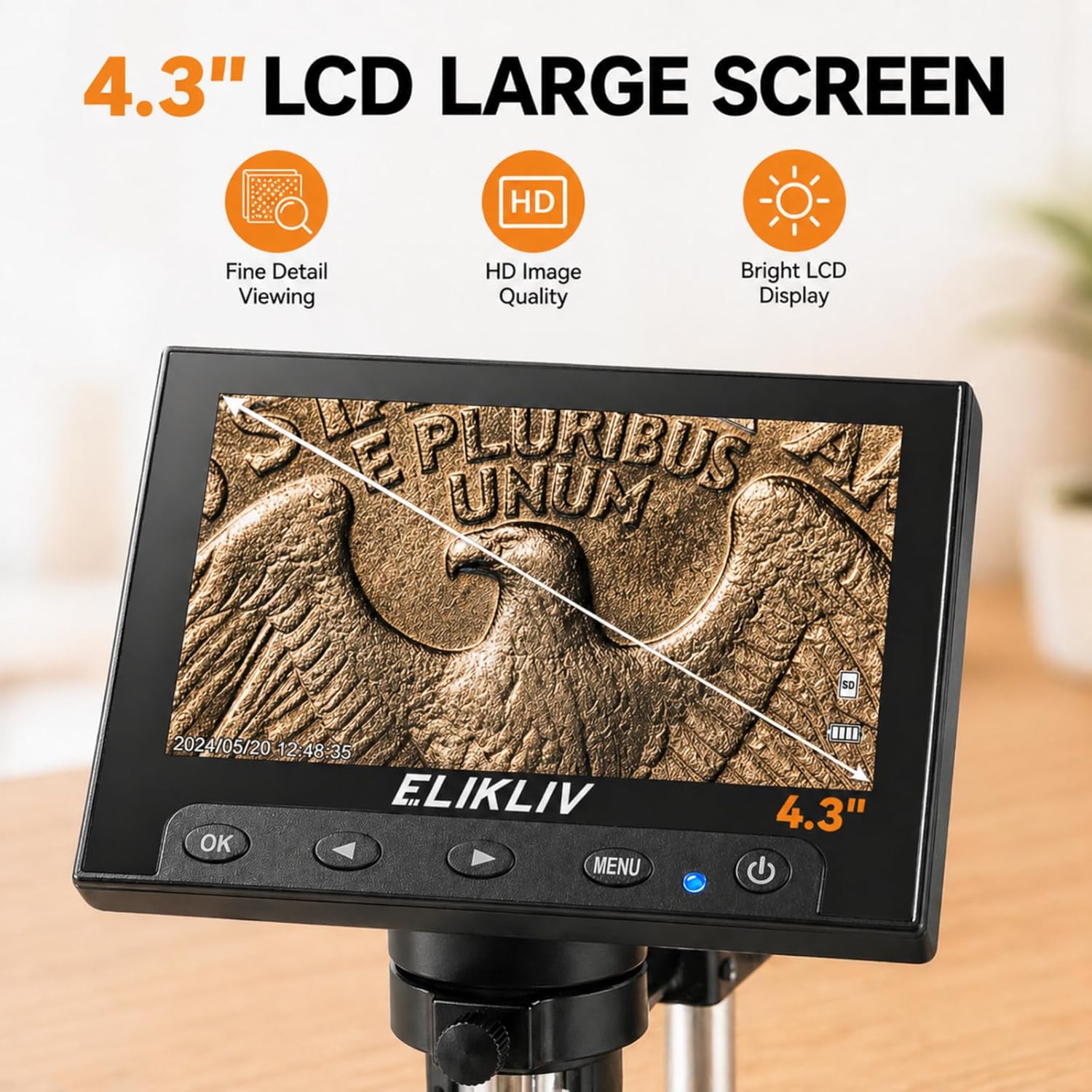
A 10x loupe catches cast fakes. For die-struck fakes, you need 20x–40x magnification and you need to know what you’re looking for at that level.
What genuine cobs show under magnification:
- Natural flow lines radiating from the point of maximum strike pressure
- Tool marks consistent with hand-cut dies (not perfectly symmetrical)
- Edge characteristics from the cizalla (shearing tool) — true cobs have ragged, irregular edges with small stress fractures from the cut, not smooth or uniformly jagged edges
- Surface granularity consistent with period silver or gold refining technology
What die-struck fakes show:
- Slightly too-uniform die work — modern CNC-assisted die engraving produces curves that are geometrically cleaner than hand-cut 17th-century dies
- Flat fields that are too flat — genuine cobs rarely have uniform, uninterrupted flat areas because the planchet (the metal blank before striking) was irregular
- Edge profiles that look cut but are actually pressed — the grain structure in a pressed edge differs from a sheared one under high magnification
NGC’s Counterfeit Detection Library notes that die-analysis comparison — matching the die characteristics of a suspect coin against documented genuine specimens — remains one of the most reliable advanced tools, but requires access to reference material. For colonial cobs, the standard reference is the Calicó catalog for Spanish coinage and the assayer-mark reference tables that Sedwick Coins and other specialist dealers publish.
3. Third-Party Certification (Slabbing) — Still the Floor for Meaningful Purchases
PCGS and NGC both offer authentication and grading services for colonial cobs, and their encapsulation (“slabbing”) remains the most efficient way to transfer authentication risk to a professional opinion backed by a financial guarantee. For any purchase above $2,000, this is not optional caution — it is the correct structural decision.
What the slab tells you:
- The coin passed physical examination by professional numismatists trained specifically in colonial coinage
- The coin’s weight, details, and die characteristics were evaluated against reference specimens
- If the coin is later proven counterfeit, both NGC and PCGS have guarantee programs (details on their respective websites, ngccoin.com and pcgs.com) that provide financial recourse
What the slab does not tell you:
- It does not independently verify shipwreck provenance — that requires separate documentation from the recovery operation (more on this in the provenance section below)
- Population report numbers (how many coins of that type have been graded) can shift; always check current NGC or PCGS population data before bidding on a coin whose value depends heavily on rarity
The tradeoff you are actually facing: Sending a coin to PCGS or NGC costs $50–$150 per coin at standard service levels and takes several weeks. If you are buying at auction with a short window, you may be bidding on an ungraded coin. In that case, your risk mitigation shifts entirely to: (a) source reputation, (b) your own in-hand examination, and (c) the specific gravity test before finalizing payment where possible.
4. Provenance Paper Trails — Increasingly Exploited, Still Essential
The American Numismatic Association’s Numismatic Crime Information Center flagged a secondary fraud pattern in their 2024–2025 alerts: fake provenance documents accompanying convincing fakes. A fabricated auction catalog printout or a letterhead certificate from a nonexistent dealer does not authenticate a coin, but it creates plausible deniability for the seller and cognitive bias in the buyer.
Documents that actually carry weight:
- A genuine lot entry from a documented Heritage Auctions, Stack’s Bowers, or Sedwick Coins auction, traceable to their published archives
- NGC or PCGS certification numbers that resolve correctly when you enter them into the respective registry on ngccoin.com or pcgs.com
- Shipwreck recovery certificates from documented operations (Mel Fisher’s Treasures, for example, issues provenance documentation tied to specific recovery manifests)
Documents that carry no weight on their own:
- A typed letter from any unnamed “previous collector”
- A photocopy of a foreign auction catalog without a traceable lot number
- A certificate from a company that doesn’t appear in any verifiable dealer or auction registry
Decision rule: If provenance is part of the value argument — meaning the seller is charging a premium because this coin came from a specific wreck or a notable collection — you must be able to verify that provenance independently. If you cannot verify it within the research time you have, price the coin as if the provenance doesn’t exist, and negotiate accordingly.
The Tools That Have Been Largely Defeated
Be honest with yourself about two tools that many intermediate collectors still over-rely on:
Photo authentication by eye: As noted above, die-struck fakes photograph convincingly. Coin World’s 2025 report included side-by-side photo comparisons of genuine cobs and die-struck replicas where the difference was invisible in standard listing photos. If a seller declines to provide in-hand viewing or return rights, treat that as a structural red flag, not just a preference issue.
“It feels right” tactile intuition: Experienced dealers do develop genuine tactile intuition about struck metal — weight distribution, edge feel, surface texture. But that intuition calibrates over thousands of in-hand examinations. At 6–24 months in the field, your intuition is not yet reliable enough to override the specific gravity result or a suspicious die analysis. Trust your tools more than your gut at this stage.
The Decision Framework Before You Buy
If you are evaluating a raw cob right now, here is the decision tree:
- Under $300: Run specific gravity if possible. Buy from an ANA member dealer or a seller with a verifiable return policy. Accept that you are taking a modest risk; limit exposure accordingly.
- $300–$2,000: Specific gravity is mandatory. Request in-hand examination or a return window. If you cannot get either, apply a significant price discount before bidding.
- $2,000–$15,000: Do not finalize purchase on an unslabbed coin without either (a) submitting for grading yourself with contingency, or (b) consulting a specialist dealer like Sedwick Coins who will give you a professional opinion on the specific piece.
- Above $15,000: Buy the slab. Buy the provenance. Verify both independently. The counterfeit risk at this price point is not theoretical — it is the primary risk you are managing.
The fakes have gotten better. Your detection process needs to stay one step ahead of them, and in 2026, that means layering tools rather than relying on any single screen. Specific gravity plus magnification plus sourcing discipline will catch the vast majority of what is circulating. For anything meaningful, add the third-party slab. That combination still works — and the counterfeiters have not found a cheap way around it yet.