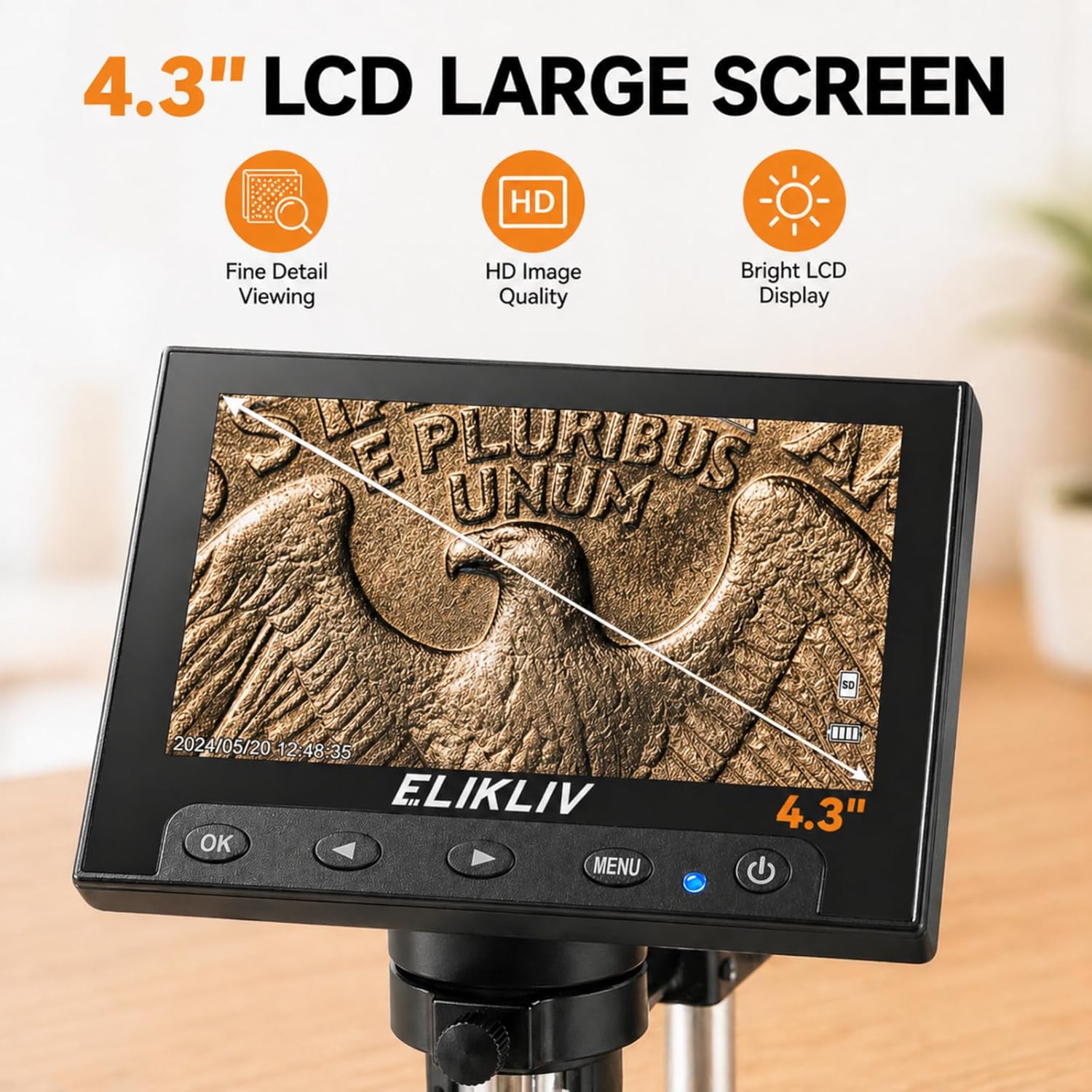
A cob coin — called a macuquina in Spanish colonial records — is a rough, hand-struck piece of gold or silver cut from a bar and hammered between two dies. Unlike the perfectly round milled coins you might picture, cobs look almost accidental: lumpy edges, off-center designs, and surfaces that look like they’ve been through a lot (because they have, often literally at the bottom of the ocean). Hidden inside that apparent chaos is a small cluster of stamped symbols — the mint mark (identifying which colonial city struck the coin), the assayer’s initial (the quality-control officer who certified the gold), and often a denomination numeral. Together those marks are the coin’s identity card. Get them right and a $300 raw cob stays a $300 cob. Get them wrong — or miss a rare assayer initial — and you may have just walked past a $3,000 piece. This article is about the one tool that separates those two outcomes at the attribution stage: a digital microscope. We’ll explain what to look for in a unit, name specific models collectors rely on, and give you a decision framework you can apply before your next purchase.
| EDITOR'S PICK[Elikliv EDM4C Coin Microscope w…](https://www.amazon.com/dp/B0FBWFY175?tag=greenflower20-20) | Mid-tier[Digital Coin Microscope 1000X](https://www.amazon.com/dp/B0FK9QQTLH?tag=greenflower20-20) | Budget pick[Elikliv Microscope](https://www.amazon.com/dp/B07QB79SN6?tag=greenflower20-20) | |
|---|---|---|---|
| Magnification | — | 1000X | 1000X |
| Built-in Scale | ✓ | — | — |
| USB/PC View | — | ✓ | ✓ |
| Photo/Video | — | ✓ | — |
| Price | $49.99 | $39.99 | $39.99 |
| See on Amazon → | See on Amazon → | See on Amazon → |
Why a Loupe Isn’t Enough for Cob Attribution
Most collectors start with a 10x loupe — the small folding magnifier that jewelers use. For a circulated Morgan dollar or a modern commemorative, a loupe is plenty. Cobs are a different problem.
The mint mark and assayer letter on a colonial gold cob are typically 2–4 mm tall, struck into an irregular, often corroded or encrusted surface with a die that may have been worn itself. You’re not reading crisp typeset letters; you’re interpreting partial impressions in a rough field. A 10x loupe gives you magnification but no working distance (the gap between the lens and the coin), no ability to adjust lighting angle, and — critically — no way to capture an image for later comparison or for sending to a dealer or grading service.
A digital microscope solves three problems simultaneously:
- Variable magnification — most useful units dial between 20x and 200x; the sweet spot for cob attribution is roughly 40x–80x
- Adjustable LED ring lighting — changing the angle of light dramatically reveals or conceals surface detail on hammered metal
- Image capture — you can photograph what you see, overlay images, and share them with specialists at firms like Sedwick Coins or submit reference images alongside a grading submission to NGC or PCGS
Numismatic News has noted in its tools-of-the-trade coverage that image documentation is increasingly expected by major grading services when collectors submit unusual attributions for cob coinage — a photo taken through a quality digital microscope can strengthen a submission note considerably.
The Specifications That Actually Matter (and the Ones That Don’t)
Microscope marketing leans hard on headline megapixel counts and maximum magnification numbers. For cob attribution, those are largely vanity figures. Here’s what to weight instead.
Optical resolution, not digital interpolation
A unit advertised as “4K” may be achieving that by upscaling a lower-resolution sensor — the same way a smartphone “zooms” by cropping and enlarging. For reading a faint assayer initial, native optical resolution is what matters. Published spec sheets from reputable manufacturers distinguish between optical and digital magnification; if a listing doesn’t separate the two, treat the number skeptically. Coin World’s buyer coverage of imaging tools has flagged this distinction as the single most common source of buyer disappointment in entry-level microscopes.
Working distance at your target magnification
At 60x, some microscopes need the lens almost touching the surface. That makes adjusting the lighting ring useless and risks scratching a coin. Look for a unit with at least 30mm of working distance at 60x. Better units spec 50–100mm, which gives you room to tilt the coin slightly — a technique experienced attribution specialists use to catch oblique light across a die impression.
Software and connectivity
Most digital microscopes connect via USB to a laptop or desktop and use proprietary or open capture software. A handful connect via Wi-Fi to a tablet. For attribution work, the ability to freeze a frame and annotate it is genuinely useful — you can circle the area you believe shows an “L” for Lima versus a “P” for Potosí and send that image as part of a dealer consultation. Units that output only live video with no capture function are a poor choice for this use case.
Stand stability
Hand-holding a digital microscope at 60x produces unusable images. A rigid stand — preferably with a coarse/fine focus rack — is not optional. Many budget units ship with a flexible “goose-neck” arm that drifts mid-session. For attribution work on small, critical details, owners consistently report that stand rigidity is the factor they wish they had prioritized over sensor resolution.
By the Numbers: Matching Magnification to the Task
| Attribution task | Recommended magnification | Why |
|---|---|---|
| Overall cob layout, finding the mark cluster | 20x–30x | Wide field; locate the stamp area |
| Reading mint mark and assayer initial | 40x–80x | Resolves partial letter strokes |
| Examining die cracks, counterfeit tool marks | 100x–150x | Surface microstructure visible |
| Corrosion vs. deliberate tooling distinction | 150x–200x | Requires very stable stand |
Source: operational guidance synthesized from NGC Coin Explorer attribution methodology notes and Sedwick auction catalog commentary on cob surface analysis.
Three Tiers of Digital Microscope for the Cob Collector
Entry tier ($40–$120): Good enough for the first year
Units in this range — the Plugable USB Digital Microscope and Celestron 5 MP Handheld Digital Microscope are two models collectors mention frequently in attribution forums — cover the basics. Published specs put both at up to 200x with LED ring lights and USB capture software. Owners consistently report that at 40x–60x, these units resolve cob mint marks adequately on well-preserved surfaces. The limitations show up on heavily corroded pieces or when the die impression is very shallow: contrast differentiation suffers, and the plastic stands on sub-$80 units introduce vibration that blurs fine strokes.
For a collector making five to ten cob purchases a year in the $200–$600 range, an entry-tier unit is a reasonable starting point. The math is simple: if it helps you correctly identify one $400 coin as a $1,500 attribution, the microscope has paid for itself several times over in a single transaction. [PRODUCT:entry-tier digital microscope for coin attribution]
Mid tier ($150–$400): Where most practitioners land
This is where the tradeoffs resolve in favor of the tool. The Amscope SM-1BSZ series and the Jiusion 40x–1000x USB microscope family sit here on published specs. More importantly, units in this range typically offer metal stands with coarse/fine focus controls, better sensor chips with genuine optical resolution in the 5–10 MP range, and software that supports image measurement overlays.
For attribution work, the metal stand alone justifies the step up. NGC’s coin authentication documentation notes that surface topology — the three-dimensional profile of a die strike — is a key differentiator between genuine colonial cobs and modern cast counterfeits. That topology only reads correctly under stable, adjustable lighting, which a rigid stand enables. Reviewers focused on numismatic use cases consistently name stand quality as the deciding factor between entry and mid-tier choices. [PRODUCT:mid-tier digital microscope with metal stand for numismatic use]
Professional tier ($500–$1,500): For the serious attribution pipeline
If you are regularly attributing coins before submitting to PCGS or NGC, or if you consult on estate holdings as a dealer or advisor, the professional tier is worth understanding. Units like the Leica EZ4 W stereo microscope (published specs: 8x–35x, excellent optics, Wi-Fi image transfer) and the Celestron Professional Biological Compound Microscope (different use case but illustrates the optical quality jump) represent what the top of this segment can do.
For cob attribution specifically, the stereo microscope format — two eyepieces giving genuine depth perception — is what experienced specialists prefer. Sedwick Coins catalog notes frequently reference stereo microscopy as the baseline for serious die variety and assayer attribution work. The depth perception lets you distinguish a genuine die-struck impression (which has characteristic flow lines in the metal) from a cast reproduction (which looks flat and porous under depth). That distinction is the difference between a genuine shipwreck 2 escudo and a cast fake, and the price gap runs into the thousands. [PRODUCT:professional stereo microscope for coin attribution]
The Decision Framework: If X, Then Y
Here’s the clean version, written for someone with a deal pending:
If you’re buying circulated raw cobs under $600 from established dealers (APMEX, Sedwick, major coin shows): an entry-tier USB microscope at $60–$100 is the right tool. You’re confirming attribution, not staking major capital on your own read. Use the microscope to verify what the dealer documented, cross-reference the assayer initial against the PCGS CoinFacts colonial reference pages, and build visual pattern recognition.
If you’re bidding on cobs at $600–$5,000 — raw or lightly certified — where the attribution is not independently confirmed: step up to mid-tier with a metal stand. You need stable imaging to compare your specimen against NGC Coin Explorer reference images and to capture documentation-quality photos before and after any cleaning consultation. The ANA’s grading standards documentation is explicit that surface alteration history materially affects value; your microscope images become part of the coin’s provenance file.
If you are attributing cobs above $5,000, consigning to Heritage Auctions or Stack’s Bowers, or advising on estate holdings: a professional stereo microscope is the correct tool, or you should be sending the piece to a specialist with one before you finalize any valuation. The counterfeit risk in the high-end cob market is real and documented — Numismatic News has covered at least two significant cast-fake series circulating in the $8,000–$25,000 range since 2023. Your personal attribution confidence at this level should be grounded in stereo microscopy and ideally confirmed by a second specialist opinion.
One Final Calibration
No digital microscope replaces numismatic knowledge. The tool reveals the detail; you still have to know what you’re looking at. The standard reference for colonial Spanish cob attribution is Sewall Menzel’s Cobs, Pieces of Eight and Treasure Coins — not a website, a physical book — and the colonial section of the PCGS CoinFacts database, which covers major mint marks, assayer initials, and known varieties by denomination and mint. Before you buy any microscope, spend an hour with those references and learn the basic letter forms for the Lima (L or LM), Mexico City (M or Mo), Potosí (P or PTS), and Cartagena (NR) mint marks. Once those patterns are in your head, even an entry-tier microscope becomes a genuinely powerful attribution instrument.
The microscope shows you what’s there. The knowledge tells you what it means.